»In the end, it’s all about people«

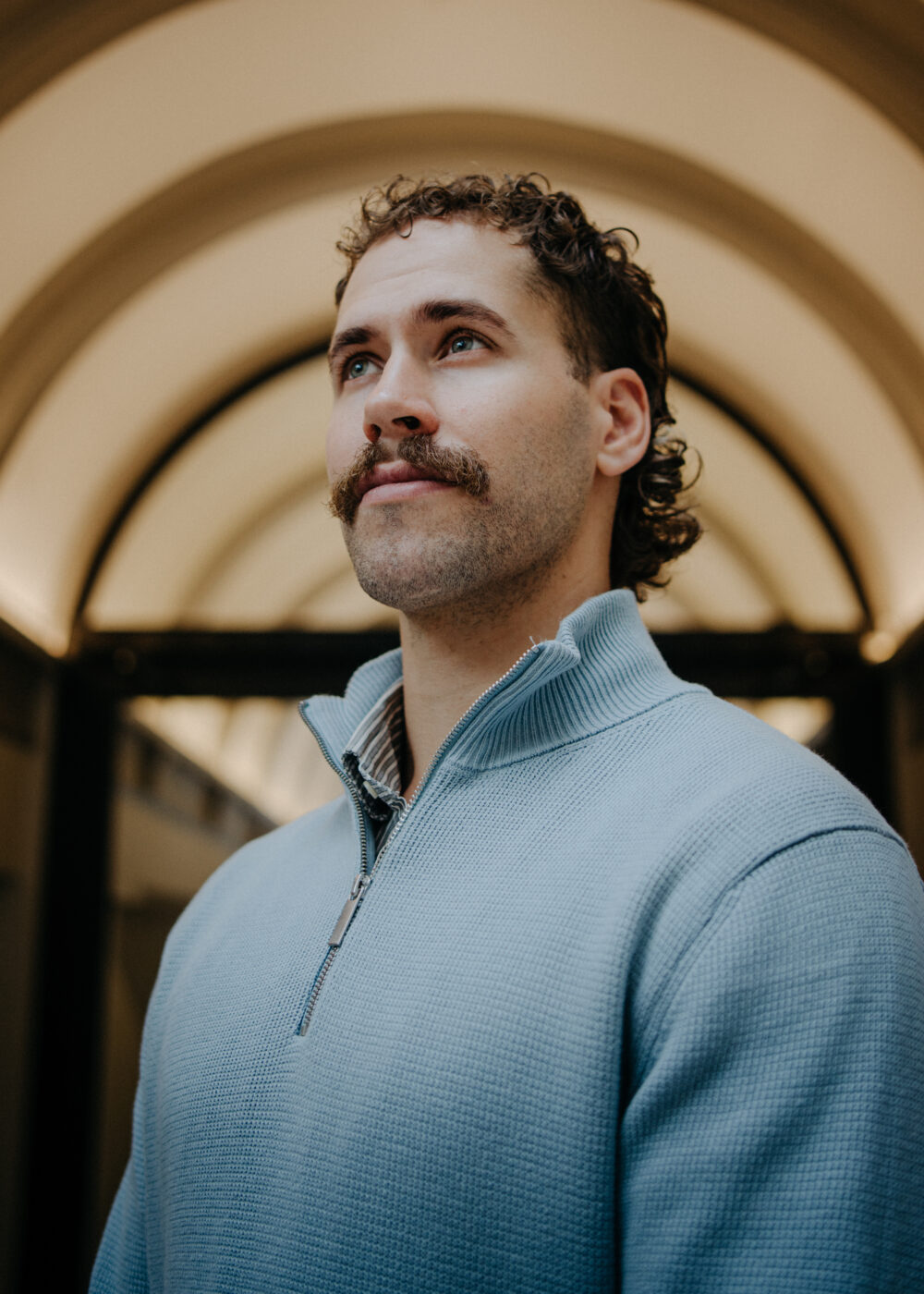
When Magnus Brandsegg began his career in tech, he knew he was drawn to two things: technology and working with people. What he did not yet know was how closely the two would become connected. 


As a consultant at Netcompany, Magnus has discovered that solving a technical problem rarely starts with the technology itself. It starts with understanding the people involved, what they need and how to build enough trust to solve the problem together.

A people person in tech

Magnus describes himself as outgoing, energetic and naturally curious about other people. It is a description he thinks his friends would recognise too: social first, and, he hopes, funny. 

»There can be quite a lot of Magnus if you let me,« he jokes. 

He studied computer technology in Stavanger, including an exchange semester in Australia. What first attracted him to technology was the problem-solving. 

»There is always something that needs to be fixed,« he says. »I like figuring out how to solve it, but also how to solve it in a way that works well, lasts and is easy to use.« 

Before starting his career, Magnus imagined that working in technology would be primarily technical. People would have their area of expertise, focus on the problem in front of them and spend much of their time working with technology. 

Consulting quickly challenged that picture. 

»You can be the best developer in the world, but if you can’t communicate, it becomes difficult.«

For Magnus, technical understanding still matters. But being able to listen, ask questions and understand different perspectives is what allows that knowledge to become useful.
»You can be the best developer in the world, but if you can’t communicate, it becomes difficult.«

Building trust before building solutions

That has become particularly clear on Magnus’ current project with Norwegian Accreditation, where the team is developing a new system to support accreditation processes. 

The domain is complex, with its own terminology, processes and requirements. Before the team could build the right solution, they first had to understand how the client actually works. 

»The client knew they had a difficult domain, and they had experienced how hard it could be for consultants to understand it,« Magnus says. »So we really had to get into the domain and build that trust.« 

For Magnus, that meant doing what comes naturally to him: asking questions, starting conversations and taking a genuine interest in the people behind the processes. 

Through models, sketches and continuous dialogue, the team has been able to test its understanding with the client before developing solutions. 

»We can show them what we are thinking and ask: will this actually work for the people using it?« 

»Sometimes it’s about understanding what the client actually needs and working with others to find the right solution.« 

Over time, that dialogue has changed the relationship. The client can now use its own terminology without having to explain everything from scratch, and the team is increasingly brought into conversations about what should be developed next. 

For Magnus, that trust is not separate from the technical work. It is what helps make the technical work better. 

Understanding how people use a system, what matters in their day-to-day work and where the real challenges lie allows the team to build solutions around actual needs rather than assumptions. 

»It isn’t only sitting with code and figuring out how to make something run better,« he says. »Sometimes it’s about understanding what the client actually needs and working with others to find the right solution.« 

A broader view of problem-solving

The experience has changed how Magnus thinks about his role. 

Since joining Netcompany, he has worked across development, testing, analysis and client-facing tasks. That variety has helped him understand that being a strong consultant is not about choosing between technical skills and people skills. 

The two depend on each other. 

»I didn’t really know exactly what I wanted to do,« he says. »But I’ve been able to try different things and figure it out.« 

With time, Magnus would like to take on more responsibility and eventually lead others. His experience so far has given him a clearer idea of what that could look like. 

Not stepping away from technology, but becoming better at connecting it to the people it is meant to serve. 

The same curiosity that makes him want to understand a difficult technical problem also makes him want to understand the person on the other side of the table. 

»In the end, it’s all about people.«