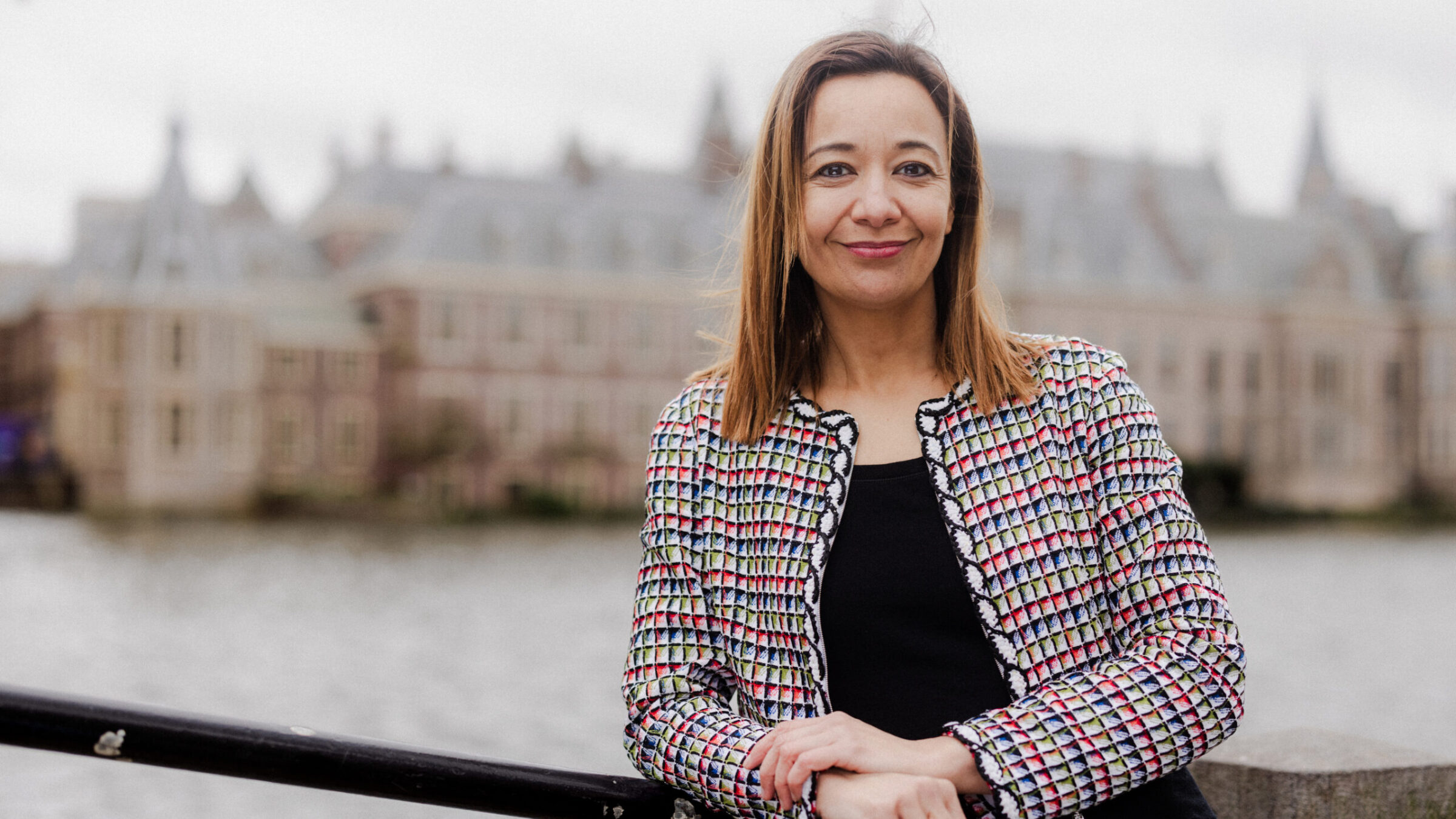
»Our greatest potential lies in European collaboration«

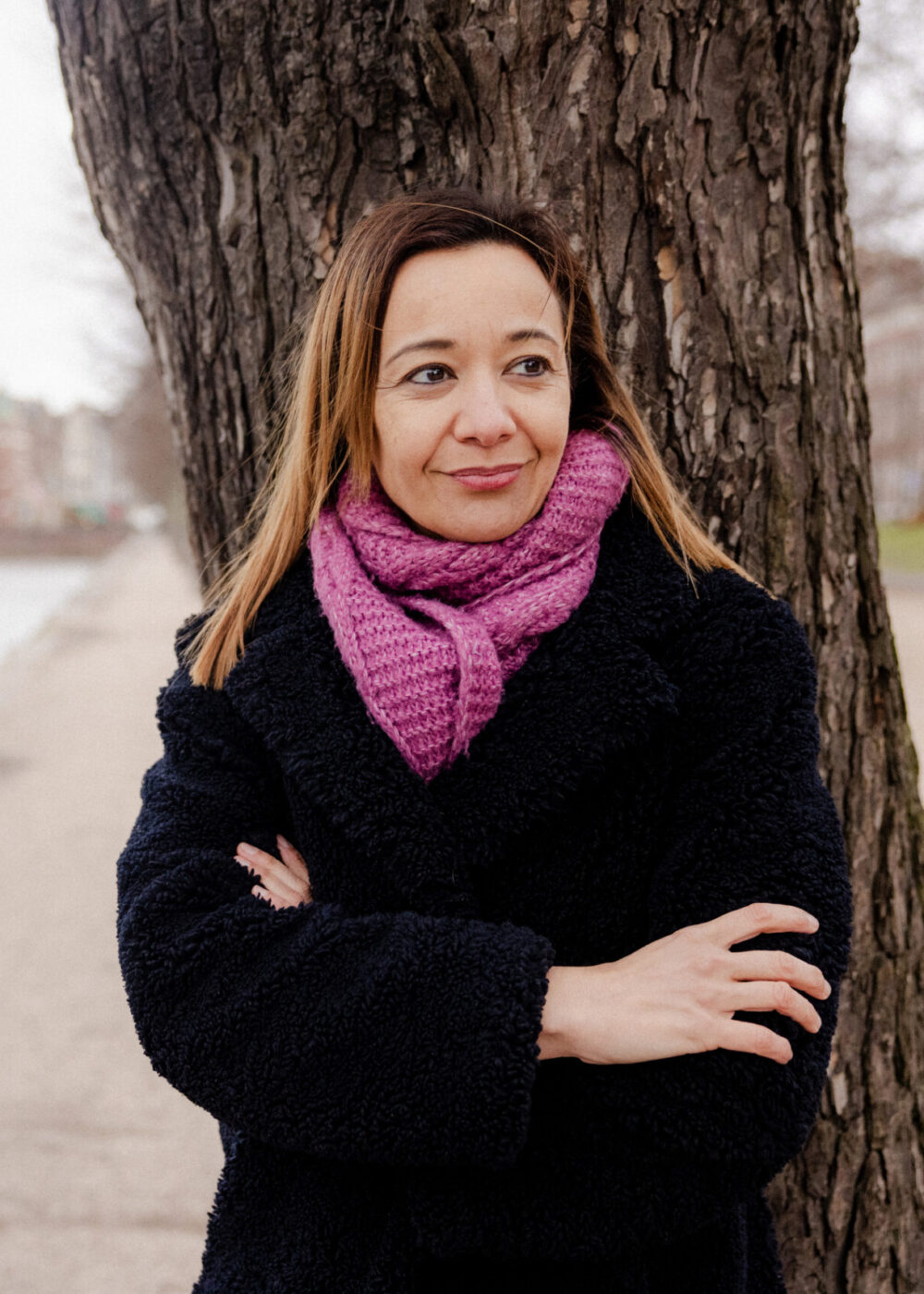
While Britt Hoppenbrouwers has a background in computer science, she admits she was never a standout coder. Yet she has a unique ability to understand and pinpoint the societal challenges that IT can address. And as Country Managing Partner for Netcompany in the Netherlands, she brings a wealth of experience from both sides of the table. 


There’s a sharp wit to Britt Hoppenbrouwers – the kind that doesn’t show up in buzzwords or polished mission statements, but in lived experience, a talent for calling things what they are, and the calm confidence that comes from having sat on both sides of the table. 

While she has a background in computer science, Britt admits she was never a standout coder. Yet over two decades in IT, she has developed a unique ability to identify the real societal challenges that technology can solve. Today, as Country Managing Partner for Netcompany in the Netherlands, she brings insights from both the public and private sectors. 

»I’m not the actual problem solver, but I’m good at detecting the problem,« she says. »Getting it to the surface – that is what drives me.« 

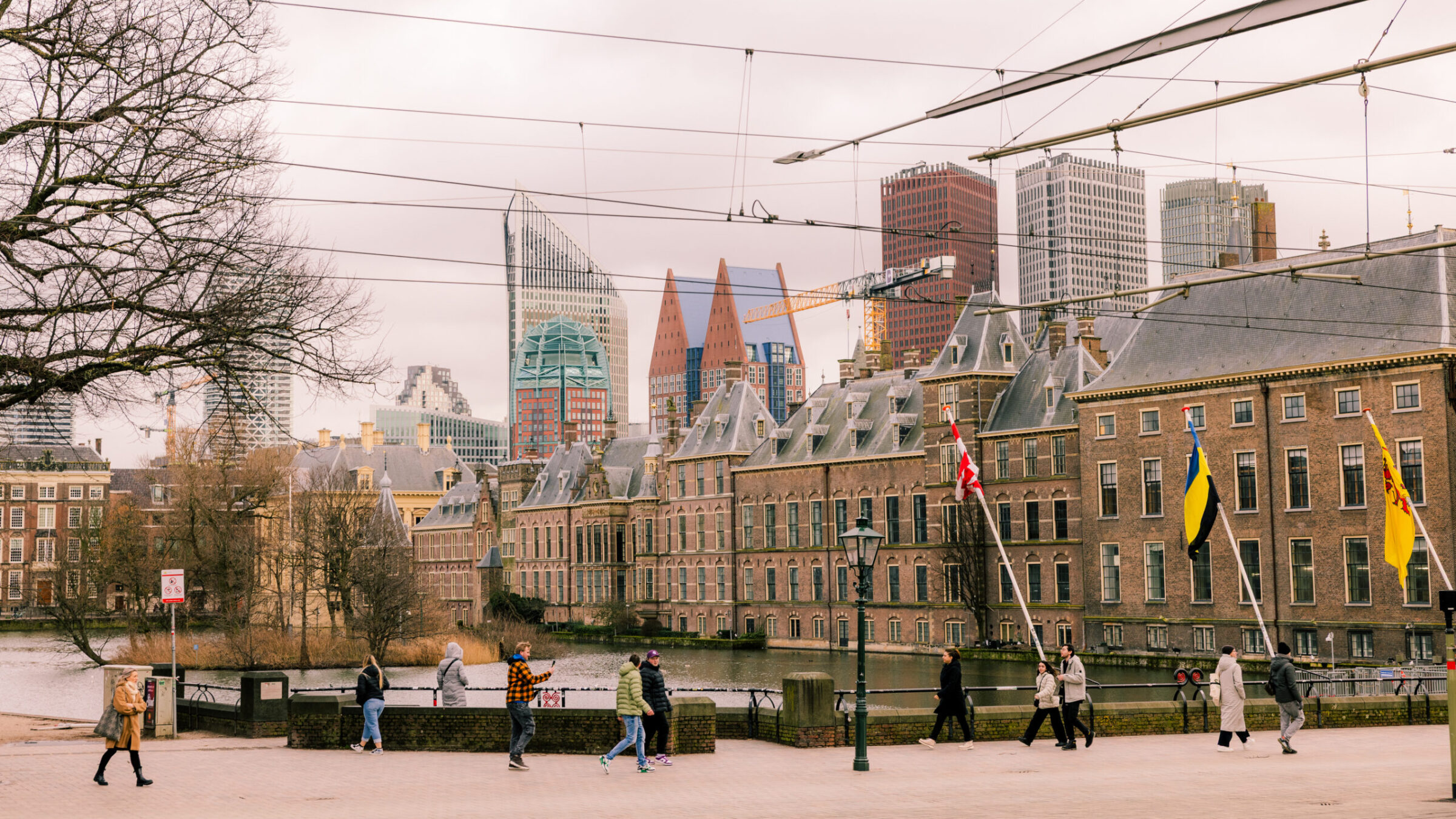
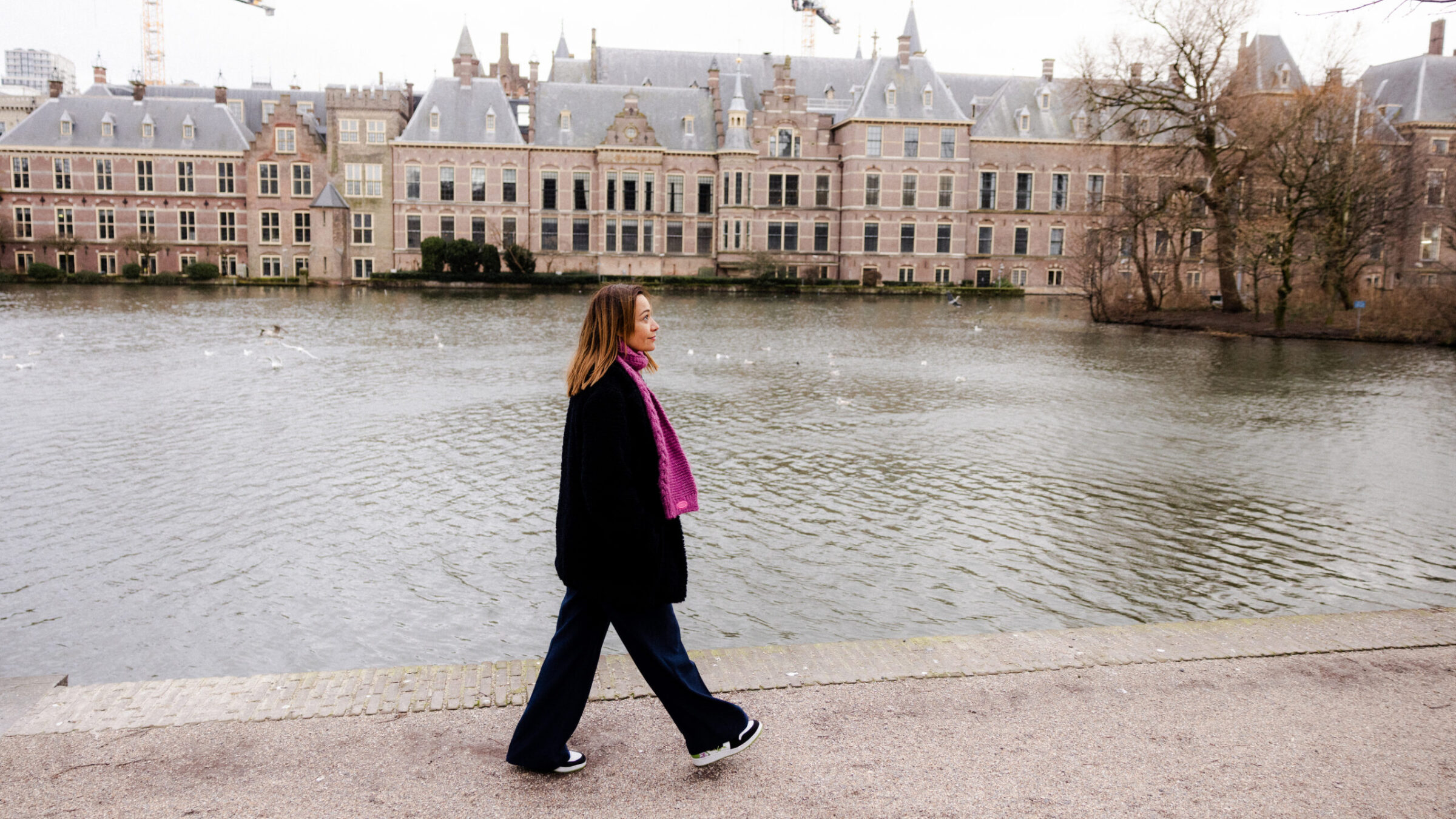
We meet at a café in The Hague, not far from where her career began – a city where decisions are made, policy meets infrastructure, and Britt first realised the real power of digital systems. It’s a fitting place to talk about the path that brought her into the world of IT, and her ambitions for Netcompany in the Netherlands. 
Identifying challenges

Britt Hoppenbrouwers was one of the first students at her school to have access to the internet, typing summaries in WordPerfect instead of by hand. But she didn’t exactly grow up intending to enter IT. 

As a teen, she dreamed of becoming a journalist – spotting emerging trends, translating complex issues, and uncovering the motivations behind people’s actions. 

»I think that finding out what really drives somebody – what keeps them awake at night – is the most genuine connection you can get to another person. And that is still what intrigues me to this day,« she says. 

Her father, though – a computer science teacher – offered an alternative path. Study something technical, he said, and you’ll always have a job. It was the ’90s, the internet was booming, and while she, like most teenagers, didn’t see much potential in his words at the time, his advice ended up shaping her choices. 

»I realised how IT was already a big part of society, and it would only become more. This was nearly 30 years ago. And look where we’re at now,« Britt says. 

She went on to earn a master’s degree in computer science – though she is quick to note she was never a standout coder. 

»I was a really bad developer,« she says with a laugh. Something she keeps telling newcomers to Netcompany. But what she did walk away with was a deep understanding of what IT can bring to society. And this is where she still to this day uses her initial journalistic drive: asking questions, searching for intent, never settling for surface-level answers. 

»To this day, I’m still interested in what drives people. Why they act the way they do. What they want to achieve. And that mindset is just as valuable in digital projects as it is in reporting.« 


Why reinvent the wheel?

Britt Hoppenbrouwers has spent nearly 20 years in IT. Having worked across a wide spectrum of government projects, she now brings to Netcompany a deep understanding of what goes on behind the scenes on the client side. 

»I’ve been on board when projects go well, and when they go wrong. And the reason for the latter mostly has to do with the Dutch love for autonomy,« Britt says.  

»In the Netherlands, we really like to figure everything out ourselves. The ‘not invented here’ syndrome is something large parts of the government suffer from. And that’s a shame.« 

»A lot of time and tax money are spent trying to solve problems that aren’t unique – they’ve often already been solved somewhere else in government or in another European country. Why reinvent the wheel?« 

Her experience at CIBG, part of the Dutch Ministry of Health, offered a clear contrast. She recalls an IT project delivered successfully, on time and on budget: building the new donor registry in the Netherlands. The project was delivered by Netcompany – and that was how she first got to know the company. 

»Later, I learned that Netcompany is all about reuse and responsible digitalisation – meaning not reinventing what’s already been figured out.«

  • »That really resonated with me: a European company striving for digital autonomy and sovereignty, not working in silos but sharing knowledge,« Britt says. And in 2023, she stepped through the door to the private side of IT.«

»How freaking awesome wouldn’t that be?«

Britt Hoppenbrouwers might hold the title of Country Managing Partner, but her mindset is decisively international. And when asked where she sees the biggest opportunities for digital transformation in the Netherlands today, her answer is clear: »Doing more on a European level.« 

»I think our greatest potential lies in collaboration with the rest of Europe – working on digital sovereignty, learning from each other. Not everything has to be ‘invented here’« she says, adding how excited she is to see more projects taking this perspective of not having to invent everything from scratch, but constantly sharing knowledge across Europe. 

Earlier this year Netcompany won the tender to replace the core application of the Dutch Medical Evaluation Board (CBG), following systems already built in Denmark and Norway. And recently, it was announced that Netcompany will build a new identification and registration system for the Dutch Immigration and Naturalisation Service (IND), Britt explains – a key step toward complying with the new EU Pact on Migration and Asylum, which aims to establish a common European system for managing migration efficiently and quickly, requiring all member states to strengthen screening processes. 

»I’m particularly proud of this project for several reasons,« Britt says. »First of all it’s designed to create a quicker and more humane process for asylum seekers and status holders. But it also has huge potential because if it works in the Netherlands, why wouldn’t all European immigration services adopt this solution to comply with EU regulations?« 

In these geopolitically challenging times, building shared solutions and learning from one another is crucial, Britt continues »And if our solution for IND spins off to more services across Europe – how freaking awesome wouldn’t that be?

»The core lies in really listening to understand the challenge, getting to the depth of what the client needs a solution to do, and then providing the evidence that you are the one to help solve it. Luckily, we have the exact knowledge and skills to do it – and that makes me a proud CMP.« 

Luck is not a strategy

The same curiosity and insistence on doing things right that drives Britt’s approach to European-scale IT projects also shapes how she builds her teams. Success, she believes, isn’t just about winning contracts – it’s about attracting the right people. 

»If you don’t have people really wanting to work with you, or clients actively calling to ask what you can do for them, then you need to rely on luck. And luck is just not a strategy,« she says, looking over the city square in front of her. 

»If the reputation is not good, there’s no trust. And who’s going to work with somebody they don’t trust? Nobody. That’s why we need to be able to attract the right people. We simply need talent to stay successful,« Britt adds, without missing a beat. 

»What I really like about the Netcompany philosophy is the idea of a pyramid – bringing in young talent straight from university and giving them the opportunity to learn and grow into new positions,« she explains. 

»To me, a talent is a combination of knowledge, skills, and mindset. You can be a super-awesome coder, but it takes both knowledge and the right mindset to keep learning – even from people more junior than yourself. Otherwise, the pyramid will erode.« 

For Britt, knowledge should never be static. A company, like a person, must keep learning, stay curious, and grow from mistakes. And diversity in teams is central to this philosophy. 

»I recently heard a story from Dr. Marcia Goddard, who has a PhD in neuroscience. She studied Formula 1 teams, and one team had struggled with a problem for a long time – not even engineers from Cambridge or Oxford could solve it,« she says:  

»At one point, they brought in someone from a lawn mower factory – and the problem was solved immediately. To me, that’s what diversity is all about: bringing in different perspectives to find the right solutions.« 

Looking ahead

For Britt Hoppenbrouwers, the drive to create impactful solutions doesn’t stop at individual projects or national borders – it extends to the future of Europe’s digital landscape. The same curiosity and strategic thinking that guided her through government and private-sector challenges now shapes her ambitions for what comes next. 

She recalls a moment at a GovTech dinner in the Netherlands, when a young participant asked, »How come we didn’t do anything 20 years ago?« Her answer was simple: »We did.« But the challenge, she explains, was convincing those in positions of authority to listen. 

»I think a huge issue in the Netherlands is that we have really well-designed and functioning mainframe systems delivering allowances and benefits that countless people depend on. The problem is, the experts who know how to maintain them won’t be here forever, and the maintenance costs are through the roof. Legacy transformation is inevitable. But as things stand, the systems work, and nobody is willing to risk downtime. That’s what holds innovation back,« she says. 

For Britt, the solution isn’t just incremental fixes – it’s a broad, strategic vision. »Looking into the future, I want to see digital transformation in its fullest sense. Growth in digital sovereignty – not just in the Netherlands, but across Europe. And when we plot it against our Dutch office, I really hope that by 2030 we’ve doubled in size. That would mean converting the thought leadership we’ve built into real delivery.« 

»It would mean organisations – within and outside government – daring to step outside their usual vendors to give European players a chance to prove themselves. That’s the future I’m working toward.«